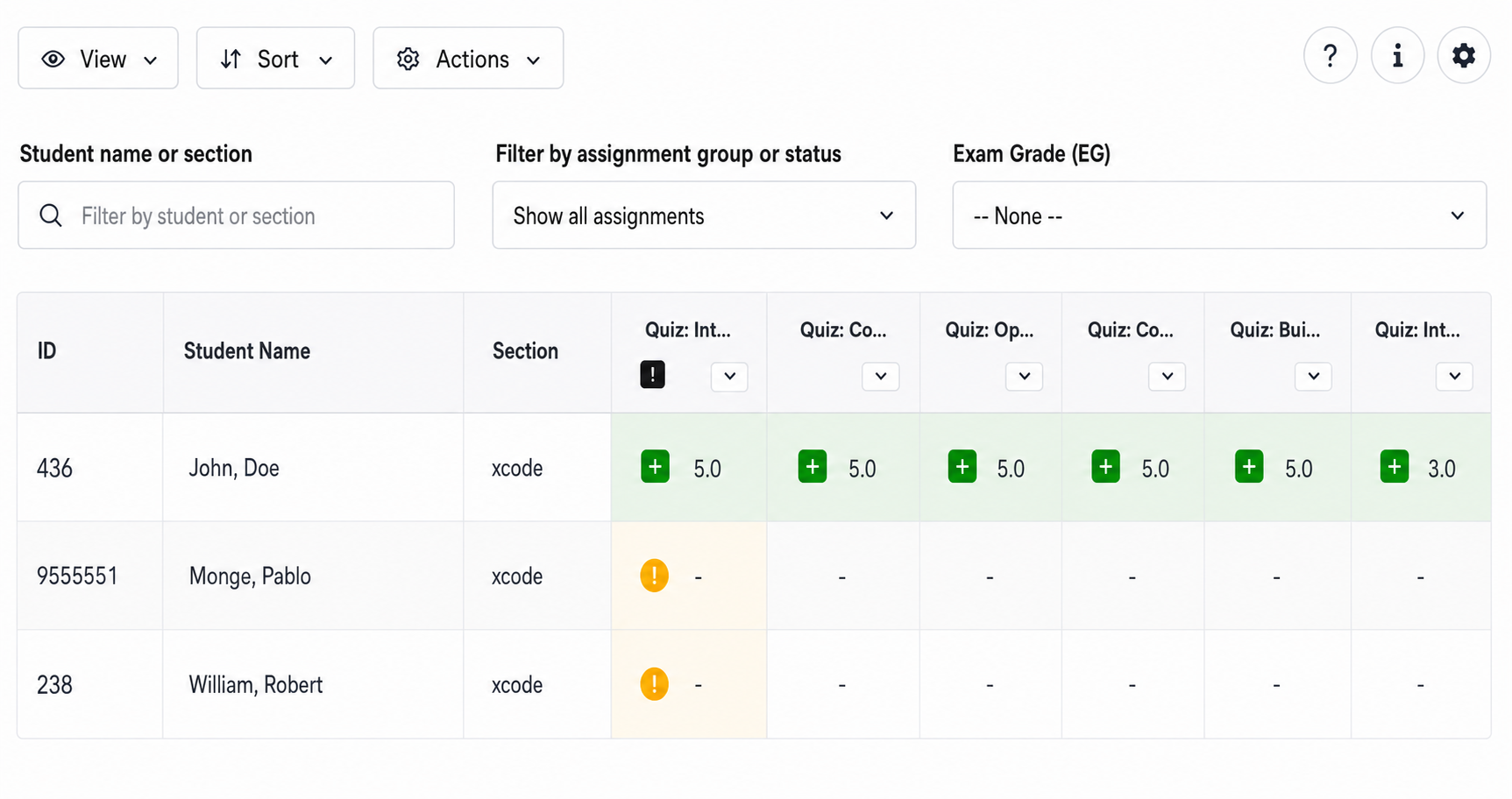
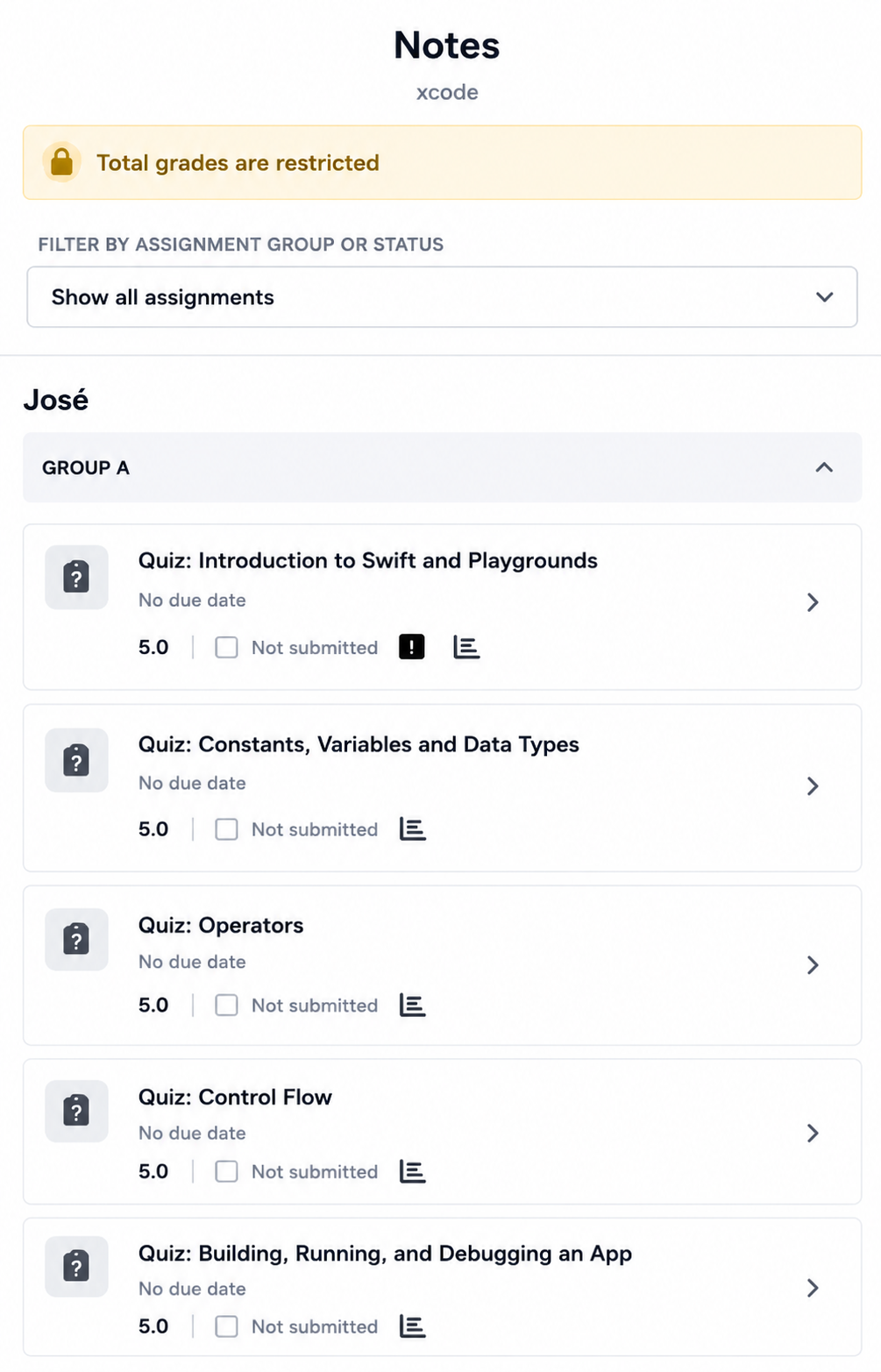
Canvas comes with its own gradebook and fixed rules: percentages, accumulated points, simple averages. The problem is that educational institutions don't assess with a single template. Every university, school, or training center has its own grading scale built over years of academic culture. ChGradeBook connects to Canvas via LTI 1.3 and transforms its rigid grades into the scale each institution needs, without forcing instructors to change the way they assess.
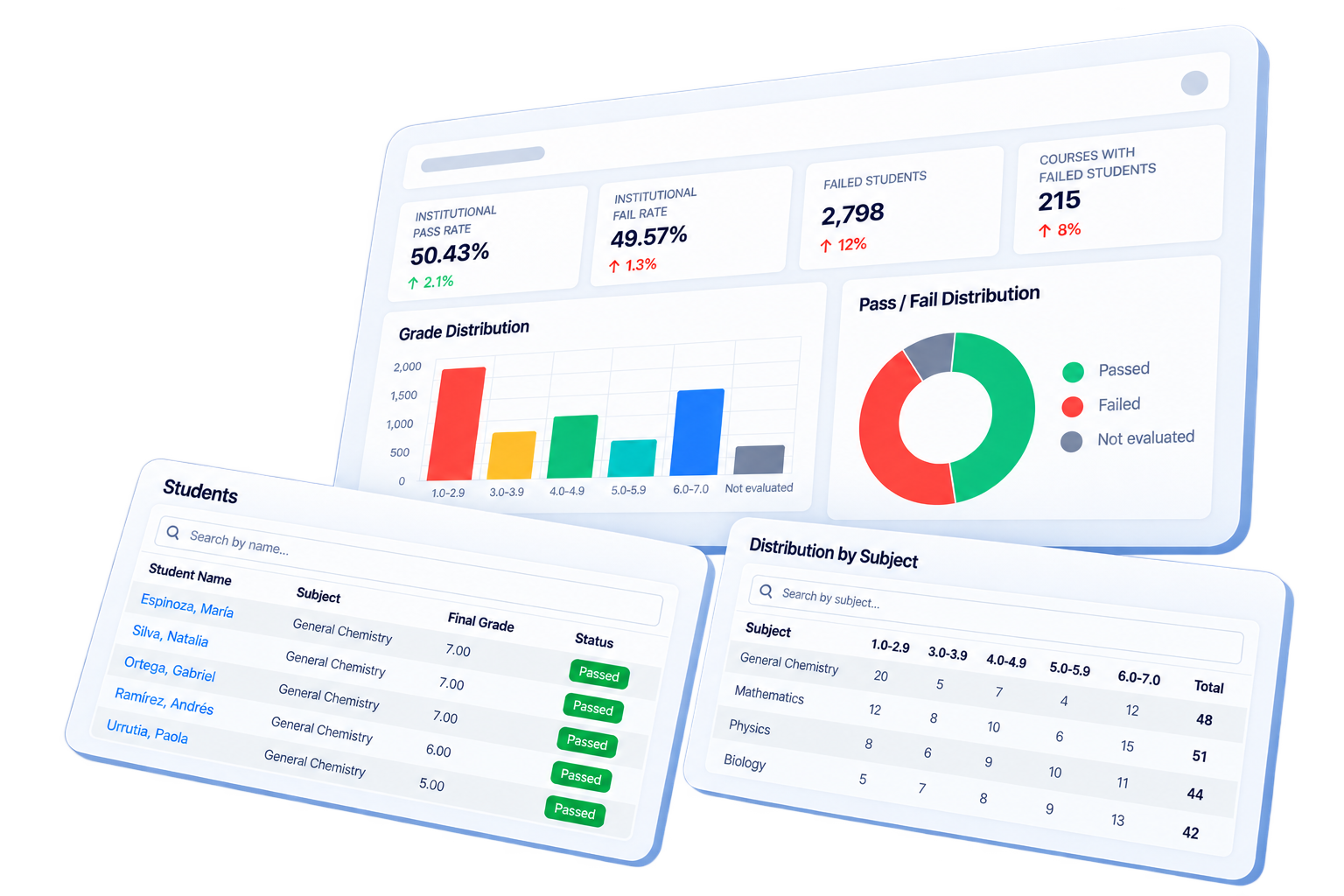
Canvas delivers a gradebook that works with a fixed structure: percentages, accumulated points, simple averages. The problem is that institutions don't assess that way. Each one builds its own scale over the years — numeric, conceptual, alphabetical, with different minimums, with their own rounding criteria. The result is that instructors end up juggling: they write the grade in their system, manually convert it to fit Canvas, and at the end of the semester someone has to audit that everything matches up.
In Chile they work with 1.0 to 7.0. In Colombia with 0 to 5. In Mexico there are scales from 5 to 10. In European systems the letter scale (A-F) or the ECTS system appears. Each institution stands by its own because it reflects how they teach and how they assess. The underlying problem isn't technical: it's that Canvas assumes a standard that doesn't exist.
ChGradeBook connects to Canvas via LTI 1.3 — the integration standard between educational platforms — and sits as a layer on top of its gradebook. The instructor accesses ChGradeBook and sees grades in their institution's scale, not in Canvas' fixed format. Behind the scenes, ChGradeBook transforms each value to the system the institution has configured, without anyone having to do a manual conversion.
Each institution defines its own rules in ChGradeBook: scale type, passing minimum, rounding, equivalences. There is no fixed mapping or single template. The connection to Canvas is direct, data syncs live with no overnight processes or midnight exports. Those scheduled syncs that always fail on a Friday afternoon don't exist here.
ChGradeBook is developed by Entornos de Formación (EDF). It connects to Canvas via the LTI 1.3 standard and sits as a layer on top of its gradebook. Instructors work with their institution's scale without having to think about conversions. Those scheduled syncs that always fail on a Friday afternoon don't exist here.
Years in educational technology
Students managed on platforms
Uptime in critical operations
Technical support for institutions
Grades, changes, and feedback sync instantly. Instructors don't have to remember to click 'sync'. There are no overnight processes waiting for the 3am batch to finish — the data travels when the change travels.
Full implementation of the LTI 1.3 standard. The connection between Canvas and the gradebook uses the protocol's secure handshake. No custom integrations with APIs that break with every Canvas update.
Canvas fires Live Events when something changes. ChGradeBook consumes them instantly and triggers the associated workflows without polling. Latency is measured in seconds, not minutes. We've reached 2,400 events per minute without degradation.
Roles and permissions for every level of the institutional hierarchy: department heads see what they need to see, instructors see their own, administrators see everything. Each with their own level of editing and approval.
Each institution assesses with its own rules: numeric, conceptual, alphabetical, with different minimums, with specific rounding rules. ChGradeBook is configured to respect those rules and automatically translate them into Canvas' system. No conversion tables to maintain, no mid-semester support calls asking why the grades don't match.
You upload the LTI 1.3 configuration XML to your Canvas instance. The handshake establishes the trust channel between the two systems. No keys shared over email, no configurations that depend on a specific person not being on vacation.
You define what syncs, when, and who can approve it. Approval chains, event triggers, cron schedules. Every change is logged in the admin interface.
They use ChGradeBook with their usual interface. The platform handles synchronization, live events, and updates to Canvas in the background, without them having to think about it.
Working with EDF on the development of ChGradeBook has been very positive. They have demonstrated high commitment, technical capability, and flexibility to adapt to our requirements, maintaining fluid communication and delivering timely solutions. We highlight the quality of the development and its focus on building a tool that responds to the real needs of academic management.
Tell us what you need and we'll show you ChGradeBook working with your real use case. No generic slides.